We are Monkleigh Primary School - Passionate about your childs start at school. read more

  • Monkleigh  Primary  School

    Monkleigh Primary School

    A small rural Primary School in the heart of N Devon, Monkleigh is a happy, fulfilling experience where we all 'smile, share and succeed.'

  • Breakfast and Tea Club

    Breakfast and Tea Club

    Wrap around care from 8am until 4.30, run by school staff, where children of all ages, have fun doing a range of indoor and outdoor activities and eating breakfast and tea together. 

    Learn more
  • Beautiful Surroundings

    Beautiful Surroundings

    Breath taking views of the surrounding countryside and marvellous outdoor facilities, with a large playground, field and many outdoor activities.

    Learn more
  • One  BIG HAPPY  Family

    One BIG HAPPY Family

    At Monkleigh we know and care for our children as individuals. Their well-being and personal development and happiness is as important as academic achievement. A happy child, who feels safe and cared for is in the best place to learn, this is evident not only in our results but in the smiling faces around school.

    Learn more
  • Exploring LEARNING  Through Play

    Exploring LEARNING Through Play

    Our Pre School and reception children have lots of exciting outside spaces to use.

    Learn more
  • Our SENSORY  Room

    Our SENSORY Room

    A unique space, used by lots of children at different times for a bit of time out of the classroom.

  • Exciting LEARNING  Environments

    Exciting LEARNING Environments

    Year 1 and 2 have use of this amazing Yurt.

The best Education we can possibly provide to your children

Early Years

      IMG 3185       IMG 6352

Intent

At Monkleigh Primary School, we believe that the Early Years Foundation Stage is crucial in securing solid foundations that children will build upon to ensure that they are effective and enthusiastic learners who will know more and remember more, understand and do more and be completely ready and excited about their next stage of learning.

It is our intent that the children who enter our EYFS develop physically, verbally, cognitively and emotionally whilst embedding a positive attitude to school and learning. We believe that all children deserve to be valued as an individual and we are passionate and ambitious in ensuring that all children receive high quality learning and teaching to enable them to achieve their full, unique potential. Teaching the children independence and Self Regulation skills is high on the agenda. Language development is central to effective Self Regulation and goes hand in hand with our commitment to developing Communication and Language.

We are committed to developing the ‘Whole Unique Child’ through a challenging, carefully planned and sequenced, engaging and inspiring and ambitious curriculum and environment. We have the same ambitions for all children in our setting and will skilfully shape the learning journey to ensure that every child has the essential knowledge, skills and experiences to ensure that they succeed.

Communication and Language is a real priority for all of the children in our setting. During every experience, interaction and conversation, we introduce, teach and develop the use of challenging vocabulary to develop and foster a love for language, books, stories, songs and rhymes. We are strongly committed to providing a range of meaningful learning experiences, in order to enrich learning and to teach, develop and provide opportunities to revisit Communication and Language skills. We have high expectations for the ways in which children can and should communicate and introduce the children to the Oracy Curriculum which is taught throughout the school.

The teaching of Phonics and Reading skills and Reading for Pleasure is of the utmost importance and the highest priority in our FSU. Accessing the world of words quickly and effectively opens up the whole world to our young learners. Carefully planned and structured Read Write Inc phonics lessons start straight away in a child’s Reception Year. During Nursery, children's listening, oral blending, sound discrimination and rhyming skills are progressively taught. In the Summer Term prior to starting Reception, Nursery children are taught the RWI Nursery programme.  

Our ambitious Curriculum Goals for Nursery and Reception outline what we want the children to know and be able to do by the end of the year. These are what we strive towards every day in what we provide for our children.

At Monkleigh Primary School, we strongly believe that the beginning of our children’s educational journey ignites the flame for learning and is imperative in “transforming lives, transforming communities”.

Maths

Mathematics

Intent

The intent of our mathematics curriculum is to have a curriculum, which is accessible to all and will maximise the development of every child’s ability and academic achievement. We deliver lessons that are creative and engaging. The 2014 National Curriculum for Maths aims to ensure that all children:

     Become fluent in the fundamentals of Mathematics

  • Are able to reason mathematically
  • Can solve problems by applying their Mathematics

At Monkleigh, these skills are embedded within Maths lessons and developed consistently over time. We aim to ensure that children are able to recognise the importance of Maths in the wider world and that they are also able to use their mathematical skills and knowledge confidently in a range of different contexts. We want all children to enjoy Mathematics and to experience success in the subject. We are committed to developing children’s curiosity about the subject, as well as an appreciation of the beauty and power of Mathematics. As a school, we have identified the understanding of number, fluency of factual recall and fluency of mathematical procedures to be a pivotal area that children need to become confident in. We place extra emphasis on these elements, particularly in KS1 and LKS2, so that children have the greatest chance of succeeding with the rest of the mathematical curriculum. 

Implementation 
Our whole curriculum is shaped by our school vision which aims to enable all children, regardless of background, ability, additional needs, to flourish and achieve the best they can. As a school we follow the National Curriculum and use the White Rose Maths scheme to help implement the delivery of the maths curriculum from Reception onwards. We chose this as we felt it best suited the school’s approach to teaching. All teachers use the long-term planning and sequences to help plan and teach engaging lessons whilst still giving each teacher the freedom to use other resources and ideas so that they can tailor their lessons to the children in their class. Our nursery aged children begin their maths journey with counting, songs, rhymes and exploring number in a variety of ways. 

At the start of each topic, an assessment is done to find out the children’s prior knowledge of a subject. This assessment serves two purposes: firstly to aid the teacher in the planning of the unit and secondly to help show the children and teachers the progress they have made throughout a topicKey vocabulary is taken from our vocabulary progression map and shared and discussed with the children throughout a unit of work.

Throughout the unit of work all children are taught about and given opportunities to increase their confidence within the subject. Although each class is in a mixed year group setting, every year group is taught separately. Every year group gets 30 minutes of teacher led maths time, whilst the other year group in the class get 30 minutes of PE. All children are then given extra tasks to complete independently, in group tasks or with adult support where appropriate. 

A typical lesson (Year 1 onwards) at Monkleigh Primary School follows as such:

  • Flashback 4 – a chance for children to revisit previous learning and embed the knowledge they have gained. 
  • A teaching input from the class teacher to 1 single year group, supported by teaching assistants.
  • A 30 minute PE lesson
  • Time for children to apply what they have learnt in an independent, paired or group task. Adult support is provided where appropriate. 
  • Teachers and support staff do live marking, where appropriate, throughout the lesson so children get instant feedback. 
  • On top of this, all KS1 children participate in a daily 20 minute Number sense lesson.  

Once all objectives/steps have been taught, revisited and also taught within reasoning tasks, the children are then re-assessed and this informs the formative assessment that teachers update. 

Children have access to a wide range of resources within school and outside of school, including the online platforms Times Table Rockstars, Numbots and Mathletics so that children can continue to develop their skills outside of lessons and continue to enjoy the subject. Children also complete the school ‘maths challenge’ that helps children improve their recall ability with number facts and times tables. Any children that are finding learning in Mathematics difficult are picked up by our Maths Intervention Teaching Assistant, who completes a diagnostic assessment based on one of these interventions: Spot on with number, counting to calculating, making a difference and fair and equal. 

She works with the children to fill in any gaps that this assessment shows they have in their learning to ensure all children have the best chance of succeeding in Maths. 

Impact 

By the time children leave our school, we aim for children to be fluent in the fundamentals of mathematics. We aim for them to have a conceptual understanding of Mathematics and have the ability to recall and apply knowledge quickly and accurately and also to be able to reason mathematically. They should have the skills to solve problems by applying their mathematical knowledge to a variety of situations with increasing efficiency and confidence, including in real-life scenarios. Finally we aim to give children the confidence to succeed in maths in the hope that they continue this into their future education and continue to enjoy the subject. 

Reception_math_progression_Map.pdf

maths_progression_map.pdf


English

Monkleigh Primary School

English Statement of Intent, Implementation and Impact 

Every interaction involves the aspects of speech, language and communication. Strong communication skills are crucial for expressing needs and feelings, interacting with others, and understanding the world around them. 

At Monkleigh Primary School we are united in our determination that every child, from the first day of their learning journey, will develop the fundamental life skills of speaking, listening, reading and writing. These skills enable children to communicate confidently and effectively in all areas of the curriculum and equips them for the life-long challenges that they will face in the dynamic world. Please click on the link below for the full Intent, Implementation and Impact information:

English Intent May 2025

Reading Progression:

Monkleigh Primary School Progression in Reading

Writing Progression:

Monkleigh Primary School Progression in Writing

Handwriting Progression:

Monkleigh Primary School Progression in Handwriting

Proof Reading Progression:

Proof reading progression

Spoken Language Progression:

Monkleigh Primary Speaking and Listening Progression Document

Vocabulary Progression:

Monkleigh Primary School English Vocabulary Progression

RWI Curriculum Matching Documents:

RWI Curriculum Matching EYFS

Year 1 Matching Curriculum RWI 

Curriculum Matching Year 2

Decision Spelling:

Y34 Planning OVERVIEW

Y56 Planning OVERVIEW


Science


710984CB C833 4B7E A37D 1C87D84AB14B

At Monkleigh Primary School, we recognise the importance of Science in every aspect of daily life. The Scientific area of learning is concerned with increasing pupils’ knowledge and understanding of our world, and with developing skills associated with Science as a process of enquiry. It will develop the natural curiosity of the child, encourage respect for living organisms and the physical environment and provide opportunities for critical evaluation of evidence.

Science Intent

At Monkleigh Primary, we encourage all children to develop curiosity and a sense of excitement towards Science.  Our Science teaching aims to give all children a strong understanding of the world around them whilst acquiring specific skills and knowledge to help them to think scientifically, to gain an understanding of scientific processes and also an understanding of the uses and implications of Science, today and for the future. 


Implementation

At Monkleigh Primary School, the children are taught in mixed age classes. To ensure that all children cover the Primary Science National Curriculum we have created a 2 year rolling plan suitable to each class and the year groups within them. These units are then planned using a unit overview with prior knowledge being key as a starting point. Children have weekly lessons in Science throughout Key Stage 1 and 2, using various programmes of study and resources. In Early years, science is taught through the children learning about the world around them in their learning through play and adult led activities to ensure the children develop strong foundations ready for the Key Stage 1 Science curriculum. Disciplinary knowledge and enquiry skills are embedded in each topic the children study and these topics are revisited and developed throughout their time at school, with some of these skills taught explicitly to ensure children can apply their disciplinary knowledge confidently in practical enquiries. Within each lesson, teachers carefully plan Flashback questions to recap on previous learning. These include questions linked to learning from the previous lesson, the last unit taught and learning from previous units.  This model allows children to build upon their prior knowledge and increases their enthusiasm for the topics whilst embedding this procedural knowledge into the long-term memory. 

All children are encouraged to develop and use a range of skills including observations, planning and practical enquries, as well as being encouraged to question the world around them and become independent learners in exploring possible answers for their scientific based questions. Specialist vocabulary for topics is taught and built up, and effective questioning to communicate ideas is encouraged. Concepts taught are reinforced by focusing on the key features of scientific enquiry, so that pupils learn to use a variety of approaches to answer relevant scientific questions.


Impact

 Our Science Curriculum is high quality, well thought out and is planned to demonstrate progression. The work given to pupils, over time and across the school, consistently matches the aims of the curriculum. It is coherently planned and sequenced towards cumulatively sufficient knowledge and skills for future learning.  If children are keeping up with the curriculum, they are deemed to be making good or better progress. Pupils are making progress in that they know more, remember more, understand more and do more. They are learning what is intended in the curriculum. All learning builds towards end points, these end points will be in children’s books for each unit of work and demonstrate the learning and impact of the unit of work,  We measure the impact of our curriculum through the following methods: 

  • In KS2, Tracking of knowledge in pre and post learning mind maps 
  • In KS1, final unit assessments are used where appropriate
  • A judgement on standards achieved against the unit end points
  • Pupil discussions about their learning, what they now know, remember, understand and can do.

Science_Progression_Map_1.

pdfReady_to_Progress_in_Science.docx.pdf

Science_Disciplinary_Teaching.docx.pdf

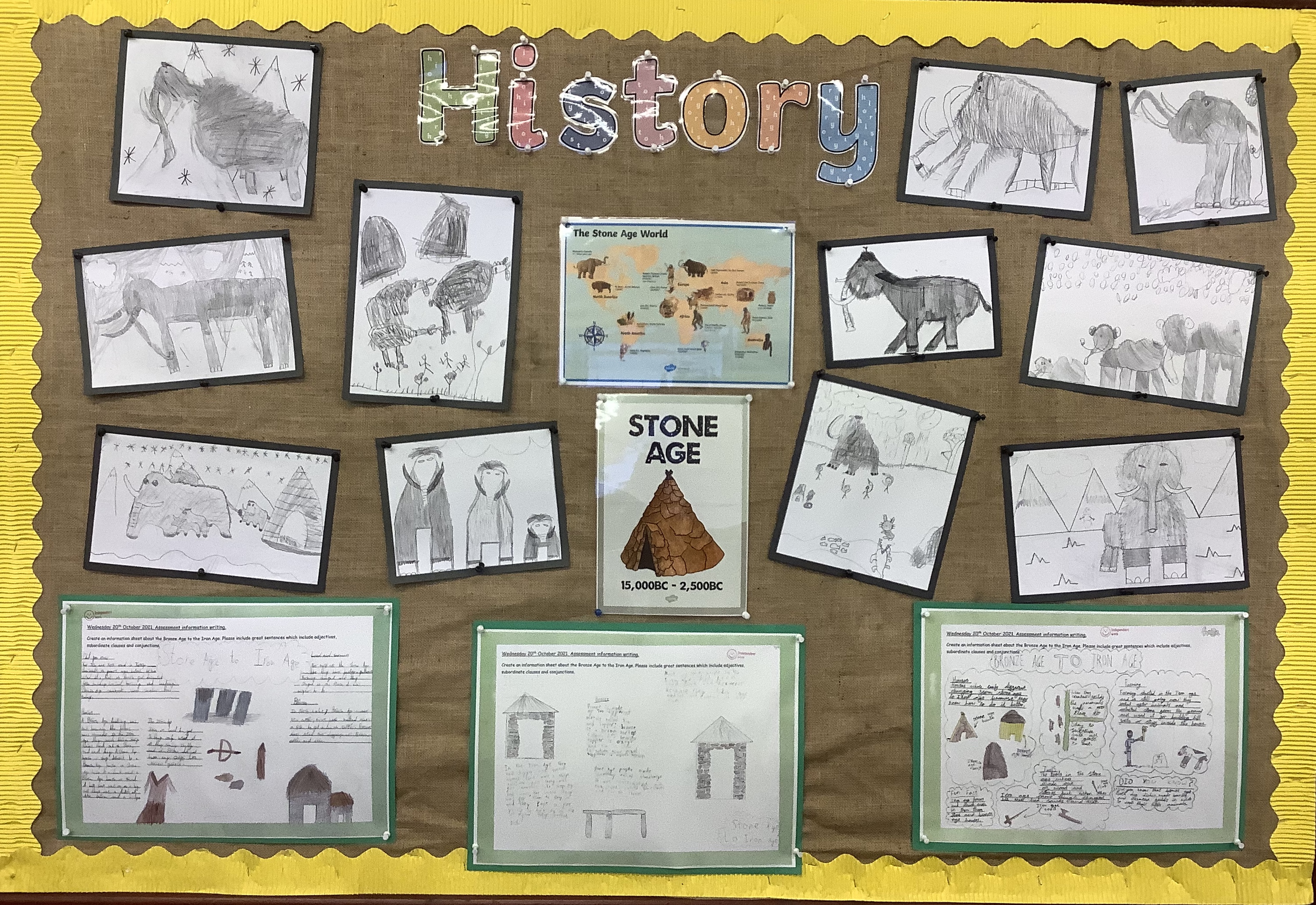
History

9B0FAAC7 2E8C 4988 88EE 019F87F16067

At Monkleigh we shape our history curriculum to ensure it is fully inclusive to every child. Our aims are to fulfil the requirements of the National Curriculum for History; providing a broad, balanced and differentiated curriculum that encompasses the British Values throughout; ensuring the progressive development of historical concepts, knowledge and skills; and for the children to study life in the past.

Intent

At Monkleigh, we aim for a high quality history curriculum which should inspire in pupils a curiosity and fascination about the Britain’s past and that of the wider world. Our teaching equips pupils with knowledge about the history of Britain and how it has influenced and been influenced by the wider world; know and understand about significant aspects of the history of the wider world like ancient civilisations and empires; changes in living memory and beyond living memory; learn about the lives of significant people of the past; understand the methods of historical enquiry and be able to ask and answer questions. We want children to enjoy and love learning about history by gaining this knowledge and skills, not just through experiences in the classroom, but also with the use of fieldwork and educational visits.

Implementation

In ensuring high standards of teaching and learning in history, we implement a curriculum that is progressive throughout the whole school. History is taught as part of a half-termly topic, focusing on knowledge and skills stated in the National Curriculum. At Monkleigh Primary School, we ensure that history has the same importance given to it as the core subjects, as we feel this is important in enabling all children to gain ‘real-life’ experiences. For example, using the local area to look at how buildings have changed in Key Stage 1, to comparing the similarities and differences in environments and communities in Lower Key Stage 2, through to looking at an in depth study of the locality in Upper Key Stage 2.

Impact

The impact and measure of this is to ensure that children at Monkleigh Primary School are equipped with historical skills and knowledge that will enable them to be ready for the curriculum at Key Stage 3 and for life as an adult in the wider world. We want the children to have thoroughly enjoyed learning about history, therefore encouraging them to undertake new life experiences now and in the future.

The work given to pupils, over time and across the school, consistently matches the aims of the curriculum. It is coherently planned and sequenced towards cumulatively sufficient knowledge and skills for future learning.

Pupils are making progress in that they know more, remember more, understand more and do more. They are learning what is intended in the curriculum.

All learning builds towards end points, these end points will be in children’s books at the end of each unit of work and demonstrate the learning and impact of the unit of work. 

pdfReady_to_Progress_in_History.doc.pdf

 History_Progression_Map.pdf

  • Foundation Stage Unit

    Welcome to our Foundation Stage Unit with Mrs Emptage, Mrs Hinchliffe, Miss Chugg, Miss Troke and Mrs Mayo

    Read more
  • Class 1

    Welcome to Class 1 with Mrs O'Donoghue, Miss Turner, Miss Tucker and Mrs Hobbs.

    Read more
  • Class 2

    Welcome to Class 2 with Mrs Slocombe and Mrs Mayhew

    Read more
  • Class 3

    Welcome to Class 3 with Mr Sussex and Mrs Jones

    Read more

Newsletters

pdfNewsletter 14.11.25


Our school goals

Our School Goals

We are a forward-thinking school, with a happy, secure and stimulating learning environment in which all members of the school community can grow in confidence and develop their full potential. We aim to prepare our children and students for a rapidly changing world by equipping them with critical thinking skills and respect for core values of honestly, loyalty and compassion.

Students will have success for today and be prepared for tomorrow.

Read more